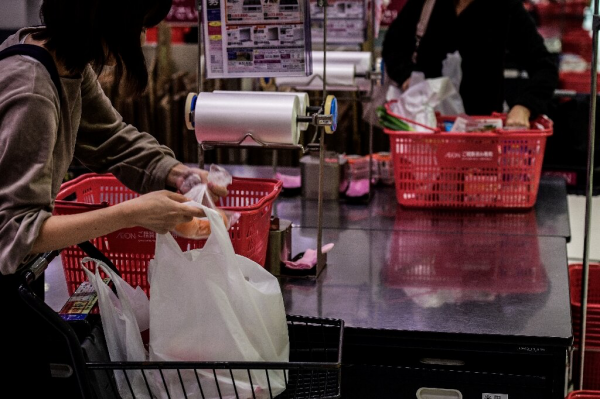


Plastic bags have become a common convenience in modern life, yet their environmental footprint is far greater than many realize. Eco will help you understand why these everyday items cause such lasting harm and what practical measures can be taken to reduce their negative impact.
.png)
1. Plastic Bags Overview
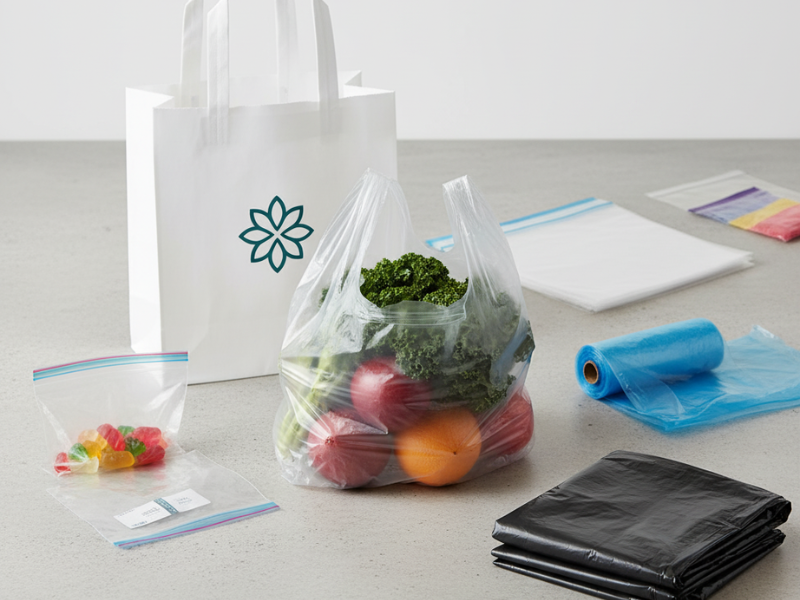
Plastic bags were first introduced in the 1960s as a lightweight, durable, and inexpensive alternative to paper packaging. Their ease of use made them one of the fastest-spreading consumer products worldwide. Today, billions of bags are produced every year, with estimates suggesting that over one trillion plastic bags are consumed globally. While they serve as a convenient tool for carrying goods, the very properties that make them popular—strength, water resistance, and low cost—also make them a long-lasting environmental challenge. Unlike natural materials, plastic does not biodegrade; it only fragments into smaller particles known as microplastics. This persistence has created problems for ecosystems, human health, and economies across the globe.
Plastic Bags Overview
2. Environmental Footprint
2.1 Non-biodegradable material
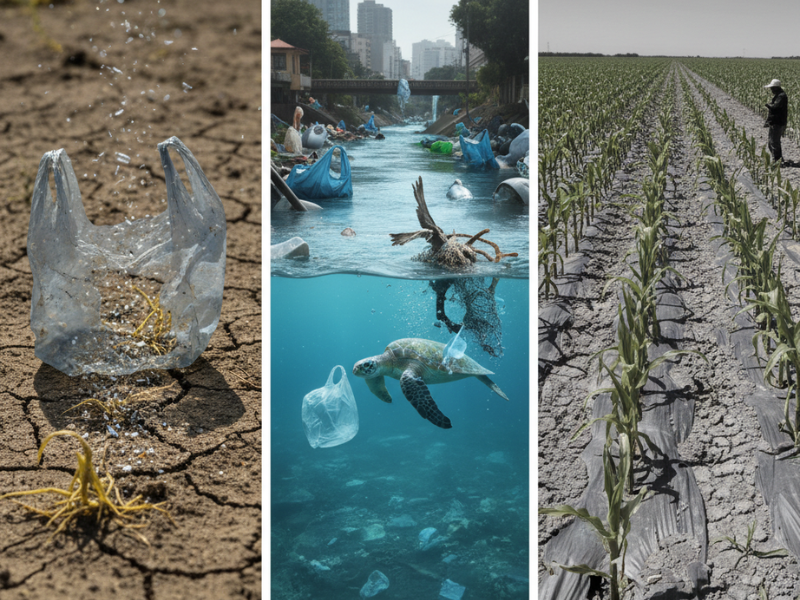
Plastic bags can take hundreds of years to decompose. Instead of breaking down safely, they disintegrate into microplastics that remain in soil and water for generations. These particles contaminate ecosystems, making their way into plants, animals, and eventually human food supplies.
2.2 Waterway pollution
Because they are lightweight, plastic bags are easily carried by wind and rain into rivers, lakes, and oceans. Once there, they clog waterways, worsen urban flooding, and threaten aquatic life. Turtles often mistake them for jellyfish, while seabirds and fish ingest them or become entangled, often with fatal results.
2.3 Soil degradation
Plastic fragments that accumulate in agricultural land alter soil structure and prevent normal water absorption. Over time, this reduces soil fertility, undermines crop production, and creates long-term challenges for food security.
Environmental Footprint
3. Health Hazards
3.1 Toxic additives
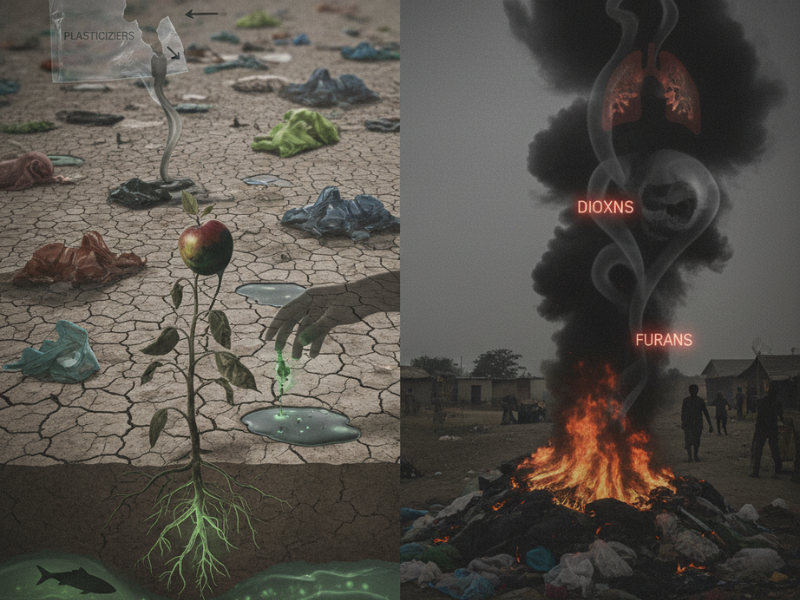
Plastic bags often contain additives such as colorants, stabilizers, and plasticizers. As they degrade, these chemicals leach into soil and water. Exposure can accumulate in food chains, potentially affecting both wildlife and humans through contamination of crops and drinking water.
3.2 Burning emissions
In many developing areas where waste management is limited, plastic bags are burned as a disposal method. This process releases harmful gases including dioxins and furans, both of which are associated with respiratory issues and long-term health risks.
Health Hazards
4. Economic Consequences
4.1 High waste management costs
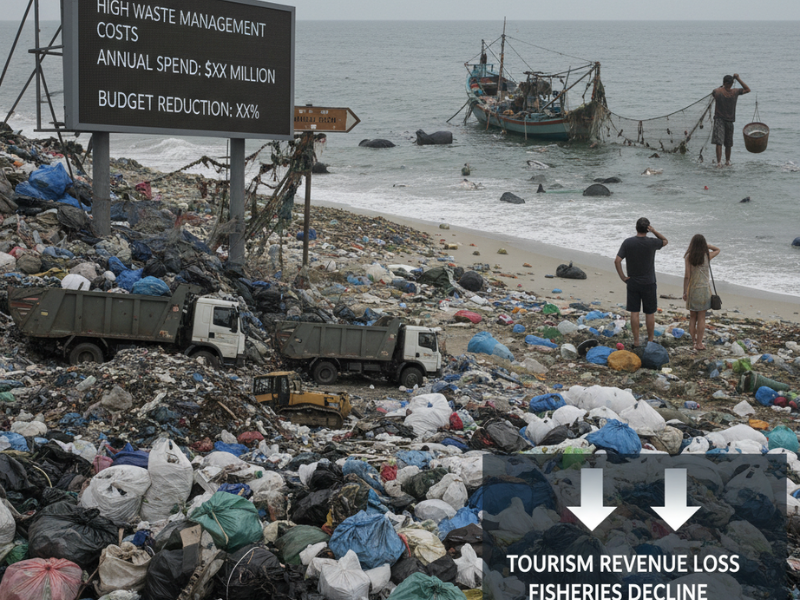
Plastic bags are lightweight but bulky, making them costly to collect and transport. Many municipalities spend millions of dollars annually removing plastic bags from drainage systems, streets, and landfills. These costs reduce available budgets for other essential services.
4.2 Losses in tourism and fisheries
Plastic litter degrades landscapes and beaches, discouraging tourism. At the same time, fisheries face declining yields due to marine species loss caused by plastic ingestion or entanglement. Both industries suffer significant revenue losses.
Economic Consequences
5. Solutions
5.1 Recycling systems
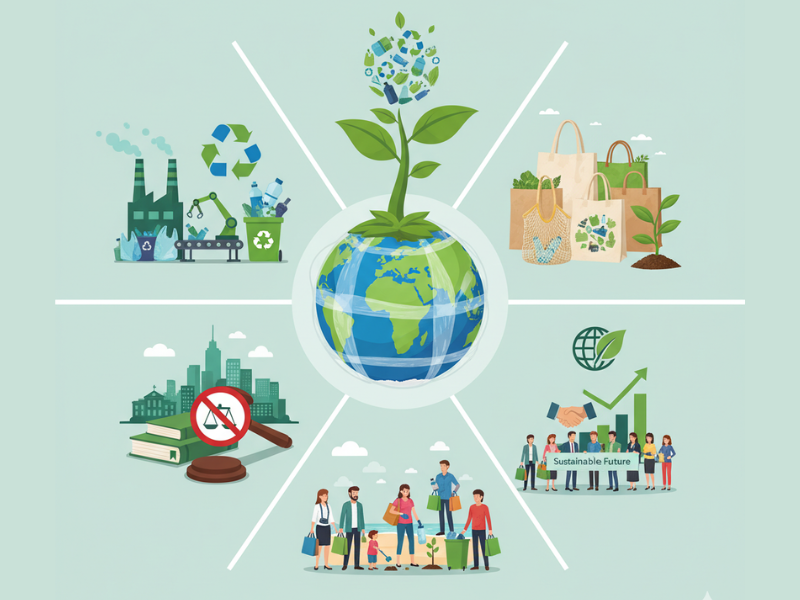
Recycling is one way to extend the life of polyethylene. Collected bags can be transformed into composite lumber, construction materials, or reusable packaging. However, recycling rates remain low—often less than 10%—due to contamination and lack of collection infrastructure. To improve, governments and companies must establish more collection points, particularly in retail centers, and invest in advanced recycling technologies.
5.2 Alternative materials
Biodegradable bags made from starch, paper, or plant-based polymers offer promising alternatives. While they may not be a perfect solution, they reduce long-term environmental damage. Some can even decompose within months under the right conditions. Transitioning to these materials requires investment but aligns with global sustainability goals.
5.3 Policy and regulation
Government regulations, such as bans, taxes, or mandatory fees on single-use plastic bags, have proven effective in reducing consumption. For example, Ireland’s plastic bag levy led to a 90% reduction in usage within a year. Strong policies not only change consumer behavior but also push industries toward innovation.
5.4 Corporate initiatives
Businesses can contribute by redesigning packaging, offering incentives for customers who bring reusable bags, and running awareness campaigns. Retail chains that phase out single-use bags demonstrate responsibility while building consumer trust.
5.5 Individual responsibility
Every individual choice matters. By carrying reusable cloth or jute bags, separating waste properly, and supporting eco-friendly products, consumers help reduce demand for disposable plastics. Collective action at the individual level amplifies the effectiveness of larger systemic solutions.
Solutions for Environment Problem
6. Frequently Asked Questions
6.1 Why are plastic bags so harmful to the environment?
They do not biodegrade, instead breaking down into microplastics that contaminate soil, water, and food chains for centuries. Their widespread use leads to massive accumulation worldwide.
6.2 Can plastic bags really be recycled?
Yes, but only certain types—mainly clean, high-density polyethylene bags. Contaminated or multi-layered bags are difficult to process. With better infrastructure, recycling rates could increase significantly.
6.3 What is the most practical alternative for daily use?
Reusable cloth, canvas, or jute bags are the most effective options. They are durable, cost-efficient over time, and eliminate the need for disposable plastics in everyday shopping.
Conclusion
Through this article, Eco has provided insights into the widespread impacts of plastic bags on the environment, human health, and global economies, along with practical solutions such as recycling, regulation, and adopting alternatives. By making more conscious decisions and supporting sustainable practices, individuals, corporations, and governments can work together to reduce plastic waste. With greater awareness and collective action, the problem of plastic pollution can be alleviated for future generations.