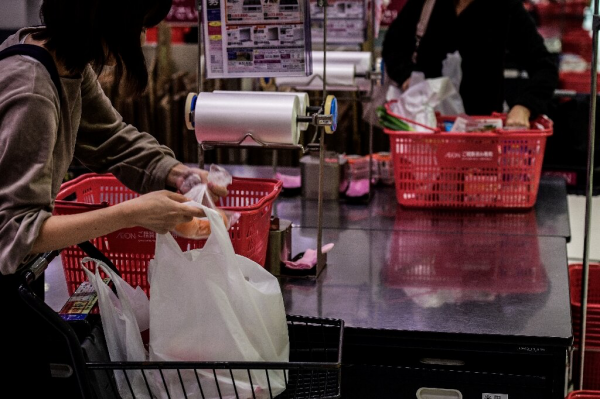


The Difference Between Poly Bags and Plastic Bags You Should Know
.png)
In the packaging industry, the terms poly bag and plastic bag are often used interchangeably. However, they are not exactly the same. Each has distinct characteristics in terms of material, durability, usage, and environmental impact. Understanding these differences not only helps businesses choose the right packaging solution but also reduces costs and supports sustainability goals. In this article, Ecoplastic will explain the difference between poly bags and plastic bags in detail.
What is a Poly Bag?
A poly bag is a type of bag made from polyethylene (PE) – one of the most widely used polymers in the world. Polyethylene comes in two main types:
- LDPE (Low-Density Polyethylene): flexible, clear, easy to print, ideal for apparel, food packaging, and consumer goods.
- HDPE (High-Density Polyethylene): stronger and stiffer, commonly used for shopping bags and shipping packaging.
Key features of poly bags
- Durable, tear-resistant, and long-lasting.
- Protects products from dust, moisture, and external impacts.
- Available in transparent or opaque finishes for product display.
- Easy to customize in various sizes, thicknesses, and styles.
Common uses
At Ecoplastic, poly bags are widely used in durable packaging lines that provide strong protection and meet diverse customer needs:
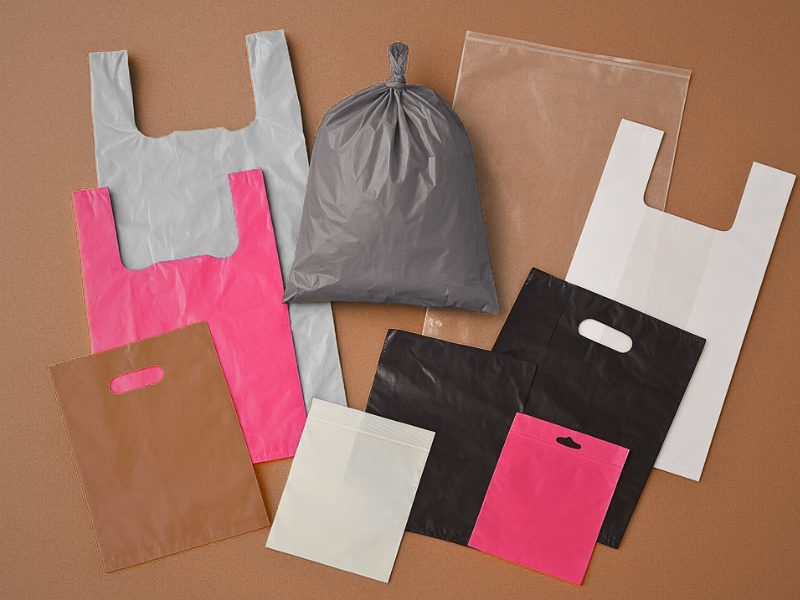
- Die-cut bags: commonly used in retail, trade shows, and fashion stores with a convenient and stylish design.
- Food bags: safe packaging that keeps food fresh and hygienic for vegetables, snacks, and dry goods.
- Block header bags: ideal for industrial and consumer products, easy to tear off and convenient to use.
T-shirt bags: popular for supermarkets and grocery stores, offering excellent strength and reusability.
What is a Plastic Bag?
A plastic bag is a general term that refers to all bags made from plastic materials. Besides polyethylene, plastic bags can also be made from:
- Polypropylene (PP): clear, stiffer than PE, heat resistant.
- Polyvinyl Chloride (PVC): durable, chemical-resistant but less eco-friendly.
- Polyethylene Terephthalate (PET): widely used in food and beverage packaging.
Typical characteristics of plastic bags
- Can be very thin and lightweight, often single-use.
- Inexpensive and easy to mass-produce.
- Generally less durable than poly bags.
Common uses
For common plastic bags, Ecoplastic provides practical and more eco-friendly solutions compared to traditional plastic bags:
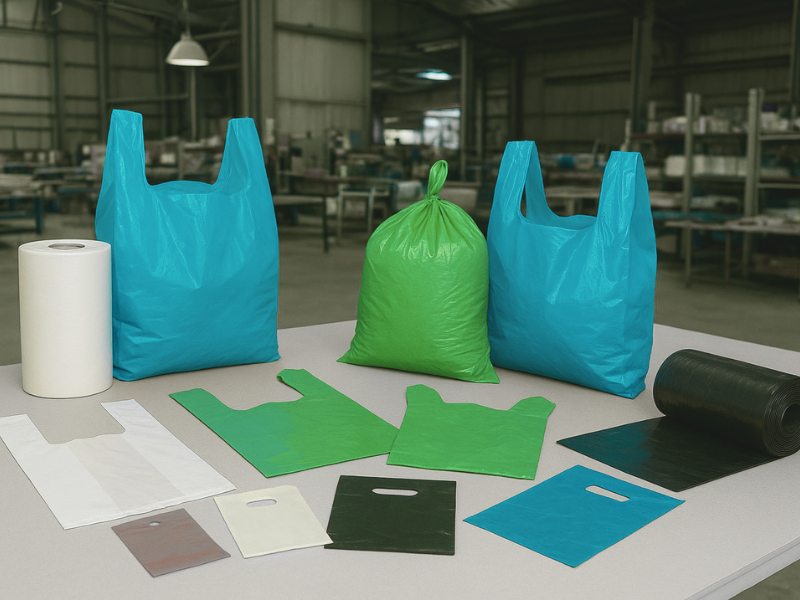
- Garbage bags & Drawstring garbage bags: suitable for households, offices, and hospitality industries, with a convenient drawstring design.
- Dog poop bags: eco-friendly hygiene solutions for pets, biodegradable and safe for the environment.
- PP Woven Bags: durable industrial packaging, perfect for agricultural products, animal feed, and export goods.
Poly Bag vs Plastic Bag: Key Differences
| Criteria | Poly Bag | Plastic Bag |
| Material | Polyethylene (LDPE, HDPE) | Various plastics (PE, PP, PVC, PET,...) |
| Durability | Strong, tear - resistant | Often thin, easily torn |
| Transparency | Clear LDPE shows products well | Varies by material (PP is clear, PVC/PET differ) |
| Reusability | Can be reused multiple times | Typically single-use |
| Cost | Slightly higher | Cheaper and more common |
| Applications | Premium packaging, e-commerce, product protection | Grocery bags, trash bags |
Pros and Cons
Poly Bag
✅ Durable and protective.
✅ Reusable and recyclable.
✅ Ideal for product display and long-term storage.
❌ Slightly more expensive.
Plastic Bag
✅ Cheap and convenient.
✅ Widely available for short-term use.
❌ Less durable, easily damaged.
❌ Major contributor to plastic waste.
Environmental Impact
This is one of the most important differences:
- Poly bags: If made from recycled or biodegradable PE, they can significantly reduce environmental impact. Their durability allows reuse, minimizing waste.
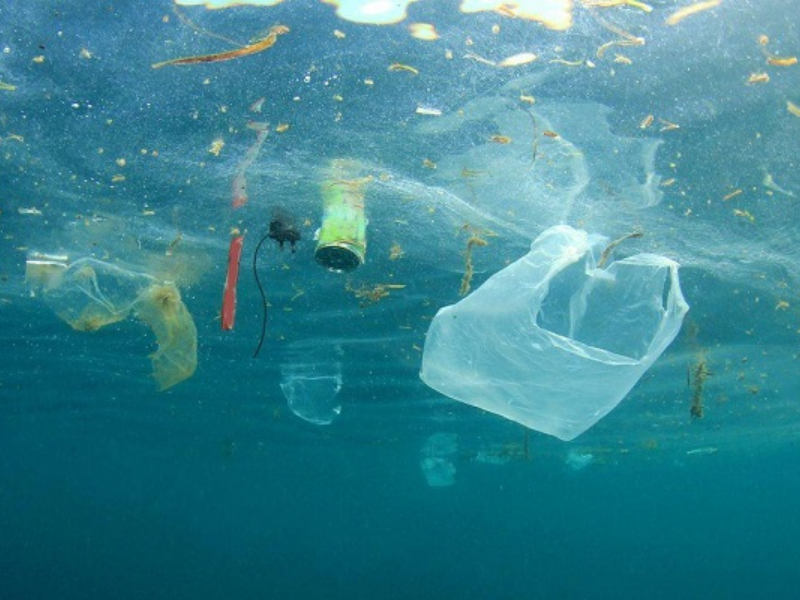
- Plastic bags (single-use): Usually thin and disposable. They are difficult to decompose and often end up in landfills or oceans, harming wildlife and ecosystems.
→ Current trend: Many businesses and consumers are switching to eco-friendly poly bags made from recycled or bio-based plastics.
How to Choose the Right Bag
When deciding between poly bags and plastic bags, consider:
- Purpose: Long-distance shipping and long-term storage → poly bag. Quick packaging or grocery use → plastic bag.
- Durability: Poly bags are better for protecting valuable or fragile goods.
- Environmental factor: Choose recyclable or biodegradable options when possible.
-
Budget: Plastic bags are cheaper for short-term needs, while poly bags provide better long-term value.
FAQ – Frequently Asked Questions
Are poly bags always better than plastic bags?
Not sure. Poly bags are more durable and environmentally friendly even though they can be recycled, but they can cost more.
Are poly bags recyclable?
Yes. If made from PE (LDPE or HDPE), poly bags can be recycled in a suitable recycling system.
Are any types of plastic bags environmentally friendly?
Yes, whether the product is made from recycled plastic or biodegradable plastic.
Conclusion
Through the information discussed above, it is clear that while poly bags and plastic bags share some similarities, they also have significant differences in terms of material, durability, applications, and environmental impact. Poly bags are typically stronger, reusable, and more eco-friendly when produced from recycled or biodegradable materials. In contrast, conventional plastic bags are cheaper and widely used, but less durable and more harmful to the environment. The choice between the two ultimately depends on your purpose, budget, and commitment to sustainability. At Ecoplastic, we are dedicated to providing safe, eco-friendly, and efficient packaging solutions tailored to the needs of our customers.